
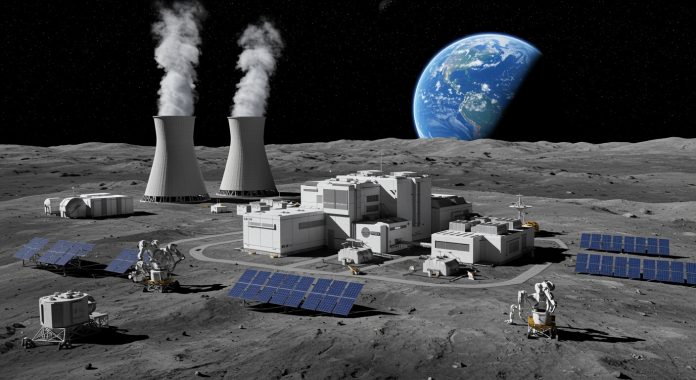
The New Space Race: Russia and the US Compete to Build the First Nuclear Power Plant on the Moon by 2036
Honestly, if you told someone in 2010 that the next big geopolitical rivalry would involve nuclear reactors on the Moon, they’d probably laugh and ask which sci-fi movie you watched last night. Yet here we are.
By the way, this isn’t science fiction anymore. It’s policy, engineering, budgets, and deadlines. And yes—Russia and the United States are racing again, this time not to plant flags, but to switch on nuclear power on the lunar surface.
Let’s dive in.
🚀 A Space Race, Rebooted (With a Nuclear Twist)
Back in 1969, the original space race ended with bootprints and a famous quote. This time, it’s quieter, more technical, and far more strategic.
Instead of astronauts sprinting down ladders, the prize is something less glamorous but far more powerful: reliable, round-the-clock energy on the Moon.
Why nuclear? Because solar panels alone are like a phone battery in airplane mode—fine at first, useless when the lights go out. And on the Moon, nights last 14 Earth days. No sunlight. No mercy.
Both NASA and Roscosmos know this. That’s why nuclear reactors are suddenly the hottest property in space exploration.
🌕 Why the Moon Needs a Nuclear Power Plant
Let’s keep it simple.
A permanent human presence on the Moon needs energy—lots of it, all the time.
Nuclear power on the Moon can support:
Human habitats
Scientific labs
Mining operations
Communication networks
Life-support systems
Moon-to-Mars launch infrastructure
Solar power struggles during long lunar nights and dust buildup. Nuclear reactors don’t care about darkness, shadows, or bad lunar weather (yes, Moon dust is a nightmare).
Think of nuclear energy as the heart of a future Moon base. No heartbeat, no survival.
🇺🇸 The US Plan: Artemis, Reactors, and a Long-Term Moon Presence

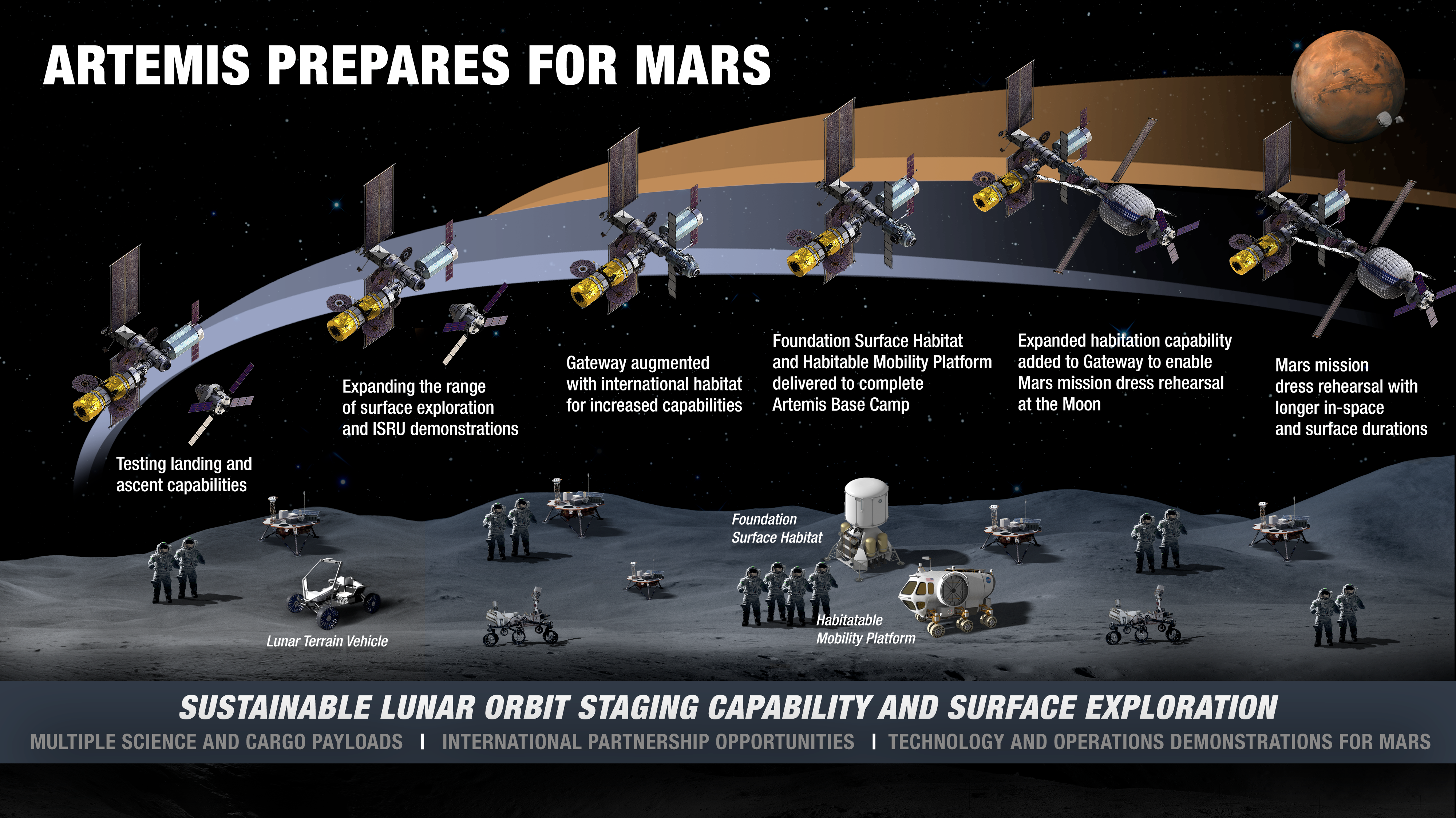
The US approach fits neatly into its broader Artemis vision—a slow, steady build toward sustainable lunar living.
Under the Artemis program, NASA plans to:
Return humans to the Moon
Build a long-term lunar base
Use the Moon as a testbed for Mars missions
At the core of this plan is Fission Surface Power (FSP)—a compact nuclear reactor designed to deliver continuous power for at least 10 years.
Key US highlights:
Small, modular reactors
Tested on Earth before launch
Designed for autonomous operation
Capable of surviving extreme lunar temperatures
NASA isn’t doing this alone. US private companies, defense contractors, and nuclear labs are deeply involved. Honestly, it feels less like Apollo and more like Silicon Valley meets the Cold War.
🇷🇺 Russia’s Moon Reactor Strategy: Quiet, Fast, Strategic


Russia, meanwhile, is taking a different path.
Roscosmos has openly discussed plans for a nuclear-powered lunar base, potentially built in cooperation with China. The timeline? Somewhere between 2033 and 2036.
Russia’s strength lies in:
Decades of nuclear engineering experience
Previous use of nuclear power in space (satellites)
Faster decision-making with centralized control
Unlike the US, Russia is less flashy with announcements. But when Moscow commits, it tends to move fast—sometimes uncomfortably fast.
And let’s be real: this isn’t just about science. It’s about influence.
What Kind of Nuclear Reactors Are We Talking About?
Relax. No one is shipping a Chernobyl-sized monster to the Moon.
These are small modular reactors (SMRs):
Output: ~40 kilowatts (enough for a small settlement)
Shielded to protect astronauts
Designed to shut down safely if damaged
Buried under lunar soil for radiation protection
Honestly, they’re more like nuclear laptops than nuclear power plants.
The Geopolitical Stakes 🌍: More Than Just Power
Here’s where things get spicy.
Whoever builds the first operational nuclear plant on the Moon gains:
Strategic leadership in space
Control over future lunar infrastructure
Influence over Moon governance norms
A technological edge for Mars missions
And yes, international law exists. The Outer Space Treaty says no nation can own the Moon. But energy infrastructure? That’s a gray zone.
By the way, history shows that whoever builds the roads often controls the traffic.
What This Means for Mars
The Moon isn’t the final destination. It’s the rehearsal stage.
Nuclear power on the Moon will:
Test reactor safety in space
Enable long-duration missions
Reduce mission costs to Mars
Provide launch fuel from lunar resources
In simple terms: no Moon reactor, no Mars city.
Risks, Fears, and the “What If” Questions
Of course, nuclear power in space isn’t all sunshine and Moon dust.
Major concerns include:
Launch accidents involving nuclear material
Space debris damage
Militarization fears
Environmental impact on lunar sites
NASA insists safety protocols are airtight. Russia says the same. Skeptics remain skeptical.
Honestly? A little fear here is healthy. Nuclear tech deserves respect, not blind trust.
Timeline: Who Gets There First?
Let’s break it down:
2025–2030: Reactor testing on Earth
Early 2030s: Cargo missions to the Moon
2033–2036: Reactor deployment and activation
Will the US win with its methodical pace? Or will Russia surprise everyone with a bold early deployment?
That’s the trillion-dollar question.
Beginner to Pro: What You Should Know (Quick Recap)
Beginners:
The Moon needs constant power
Nuclear energy solves long lunar nights
US and Russia are leading the race
Intermediate:
Reactors are small, modular, and safe
Energy enables mining, habitats, and research
Moon power = Mars readiness
Pro Level:
This is about geopolitics, not just science
Lunar infrastructure sets global space rules
Energy dominance = strategic dominance
❓ FAQs (Featured Snippet Ready)
Why not just use solar power on the Moon?
Because lunar nights last 14 days, and solar power can’t provide continuous energy during that period.
Is nuclear power safe in space?
Modern space reactors are small, shielded, and designed to shut down safely if damaged.
When will the first Moon nuclear plant be built?
Current estimates point to 2033–2036, depending on mission success and funding.
Will this lead to Moon militarization?
Officially no—but strategic infrastructure always carries geopolitical implications.
Final Thoughts: The Moon Is No Longer Neutral Ground
Honestly, the Moon used to feel distant—romantic, poetic, untouchable. Now it’s becoming practical, industrial, and competitive.
This new space race isn’t about ego or flags. It’s about energy, endurance, and who shapes humanity’s future beyond Earth.
And whether you’re a space nerd, a policy watcher, or just someone who likes watching history unfold—this is one race worth paying attention to.
💬 Your Turn
Do you think nuclear power on the Moon is the right move—or a dangerous gamble?
Drop your thoughts in the comments, share this with a fellow space geek, and let’s talk Moon futures. 🌕🚀