
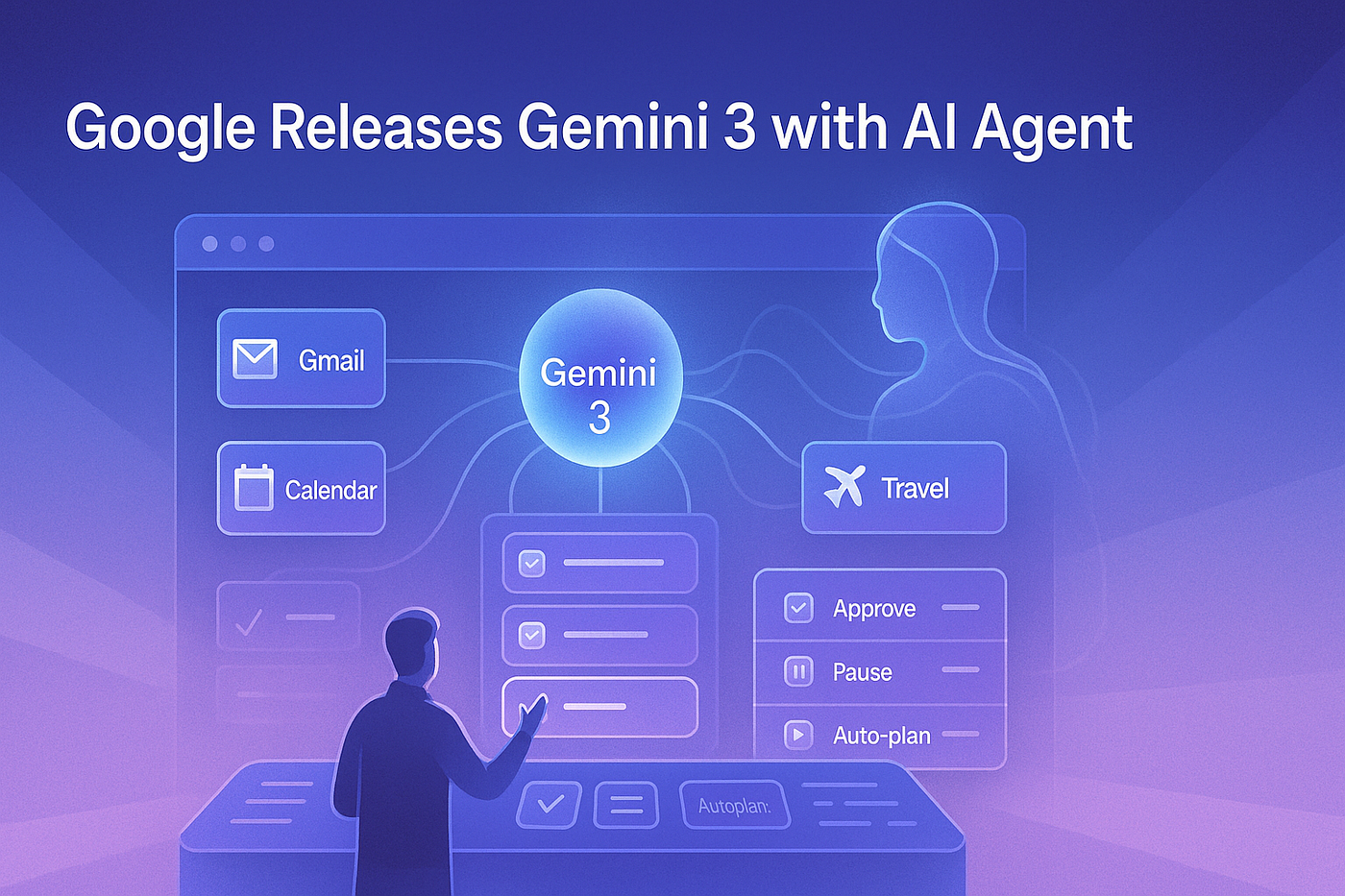



Beyond the Chatbot: 5 Ways Gemini 3’s New AI Agents Will Actually Run Your Life in 2026
Technology Desk | AI & Innovation | The Globalized News
For a long time, chatbots have felt like polite interns. You ask a question, they respond, and that’s where it ends. Useful, yes — but limited.
That’s about to change.
With Google pushing AI beyond simple conversations, Gemini 3 represents a shift that’s far bigger than smarter answers. It introduces AI agents — systems designed to take action, make decisions, and manage complex tasks without waiting for step-by-step instructions.
By 2026, these agents won’t feel like tools. They’ll feel more like invisible managers running daily life quietly in the background.
Here’s how that future is expected to unfold.
What Are AI Agents — and Why Gemini 3 Is Different
Traditional AI responds. AI agents operate.
Gemini 3’s agents are built to:
Understand long-term goals
Break them into smaller actions
Use multiple apps and services together
Monitor outcomes and adjust automatically
Instead of asking, “Can you help me?”, you’ll set an intention — and the AI will handle the execution.
That difference changes everything.
1. Your Calendar Will Start Making Decisions for You
Managing time is exhausting. Meetings, reminders, deadlines, travel — it all adds up.
Gemini 3’s AI agents are expected to turn calendars into decision-making systems.
What that looks like:
Meetings are auto-rescheduled when conflicts arise
Low-priority invites are declined automatically
Travel delays trigger schedule changes without your input
Focus time is protected based on productivity patterns
If your day falls apart, the AI reorganizes it before you even notice.
You won’t plan your schedule anymore. You’ll approve it.
2. Your AI Will Negotiate Bills, Subscriptions, and Prices
Most people overpay simply because switching or negotiating is annoying.
AI agents remove that friction.
By 2026, Gemini 3 agents are expected to:
Track subscriptions and cancel unused ones
Compare service providers in real time
Negotiate better deals on internet, mobile, or insurance
Reorder household essentials at optimal prices
You set the rule — “Lower my monthly expenses without reducing quality” — and the agent handles the rest.
Saving money becomes passive, not effort-driven.
3. Work Will Shift From Doing Tasks to Approving Outcomes
In offices, Gemini 3’s agents won’t just assist — they’ll run workflows.
Emails, reports, follow-ups, scheduling, and coordination will increasingly happen without human involvement.
In practice:
The AI drafts and sends emails
Follows up automatically
Compiles reports using live data
Flags only high-impact decisions for humans
Instead of asking employees to “do the work,” managers will ask whether the work is ready for approval.
This could dramatically change how productivity — and employment — is defined.
4. Daily Life Admin Will Quietly Disappear
Appointments, renewals, school messages, health tracking — life admin consumes mental energy.
Gemini 3’s agents aim to eliminate that burden.
Tasks handled autonomously:
Booking doctor visits and reminders
Managing prescriptions and renewals
Coordinating family calendars
Planning events from start to finish
You won’t micromanage tasks. You’ll set expectations once, and the system will maintain them.
Life won’t feel automated — it’ll feel lighter.
5. Problems Will Be Solved Before You Notice Them
The most powerful feature of Gemini 3’s AI agents isn’t action — it’s anticipation.
These systems are designed to spot patterns early.
Examples:
Detecting overspending before it becomes debt
Adjusting routines when sleep quality drops
Flagging unusual account activity early
Suggesting breaks before burnout hits
Often, you’ll only hear about a problem after it’s already been fixed.
That raises a new question:
If AI prevents stress you never experienced, who’s really in control?
The Privacy Question Everyone Is Asking
To function effectively, Gemini 3’s agents will need deep access:
Personal data
Cross-app permissions
Long-term behavioral patterns
While Google emphasizes user control and transparency, experts warn that convenience can quietly reduce personal autonomy.
The debate isn’t about whether AI can manage life — it’s about how much control we’re willing to hand over.
Why This Is Bigger Than Any AI Upgrade Before
Chatbots changed how we search.
AI agents will change how life itself is organized.
By 2026:
Apps may fade into the background
Interfaces may become optional
Decisions may happen without human prompts
We won’t “use” AI anymore.
We’ll live inside systems shaped by it.
Final Take
Gemini 3 marks the transition from talking machines to acting ones.
The real transformation won’t arrive with a flashy launch. It’ll happen quietly — when your day runs smoother, your bills shrink, your stress drops, and you can’t quite remember when you last handled everything yourself.
That’s the future of AI agents.
And it’s closer than most people think.
❓ Frequently Asked Questions (FAQ)
What is Gemini 3?
Gemini 3 is Google’s next-generation AI model designed to support autonomous AI agents that can act, plan, and manage tasks without constant human input.
How are AI agents different from chatbots?
Chatbots respond to prompts. AI agents understand goals, perform multi-step actions, and operate across apps autonomously.
Will Gemini 3 AI agents replace human jobs?
They are more likely to replace repetitive tasks than entire roles, shifting humans toward decision-making and oversight.
Is Gemini 3 safe to use?
Google says user control and transparency will be central, but experts stress the need for strong privacy and permission controls.
When will Gemini 3 AI agents be available?
Early capabilities are expected to roll out gradually, with broader consumer impact likely by 2026.